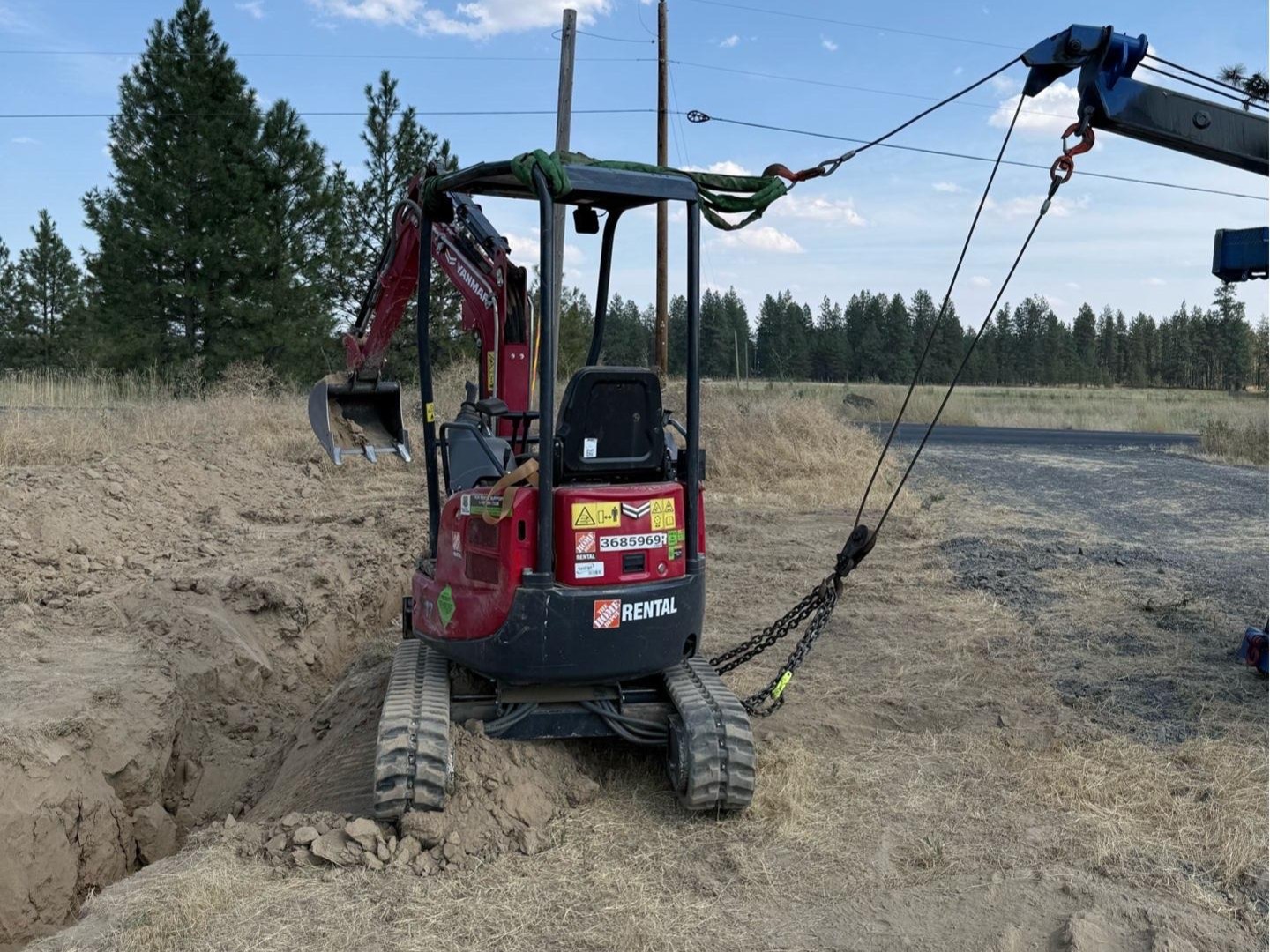
Written by the FleetEasy Team
Providing fleet and heavy equipment recovery throughout the Pacific Northwest
When an excavator slips into a trench, ditch or other excavation, its position, weight distribution, ground conditions and access to the site all affect how it can be safely recovered.
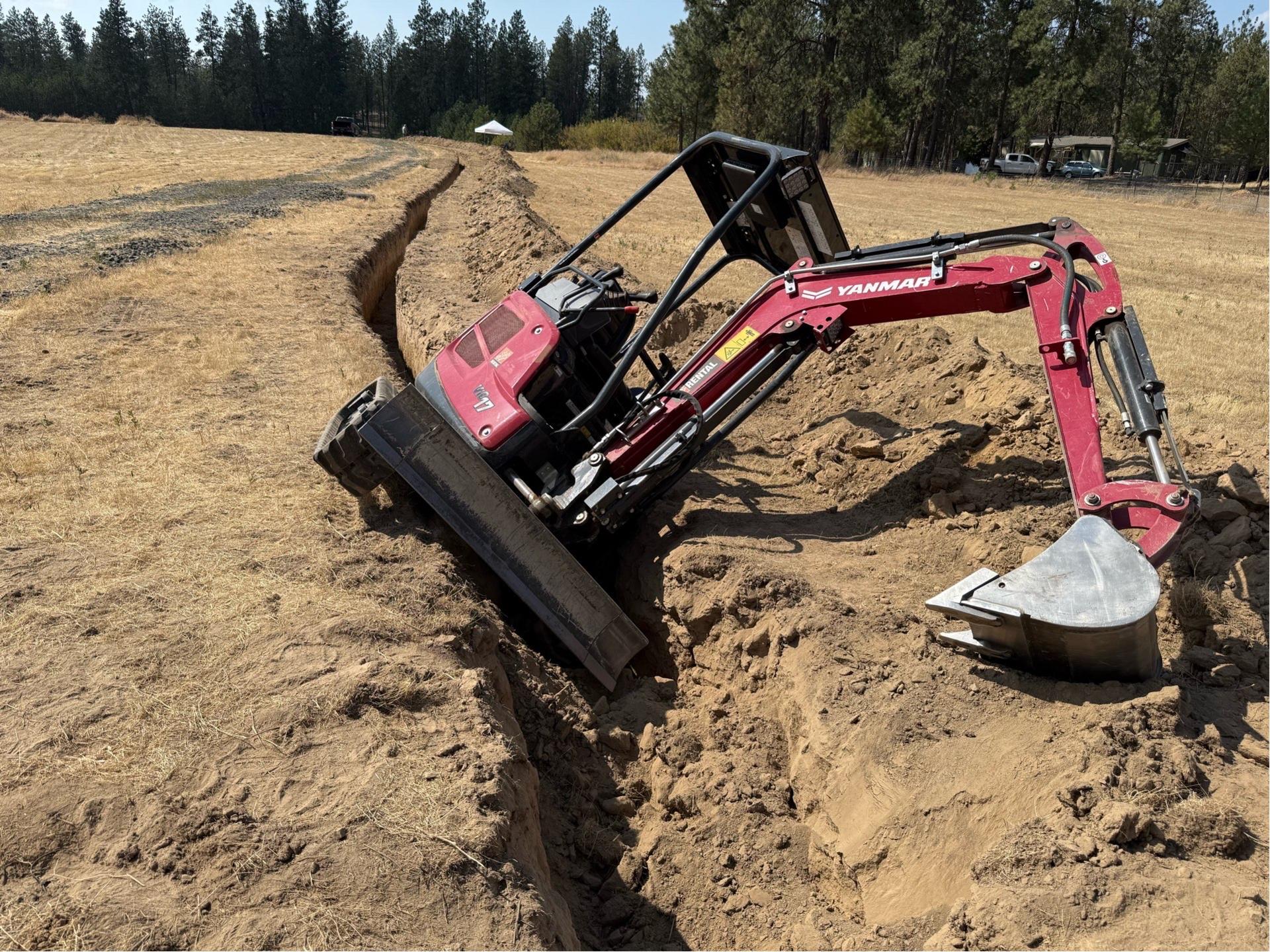
FleetEasy recently responded to an mini excavator that had slipped into the track it was digging. The machine ended up partially in the ditch, with roughly half of the excavator in the hole and the other up on solid ground. Because the excavator was at an uneven angle and its tracks could not be relied upon to drive it out, heavy equipment recovery was required.
Pro-Tow by FleetEasy was there to get the job done.
Leaning Excavator Rescued
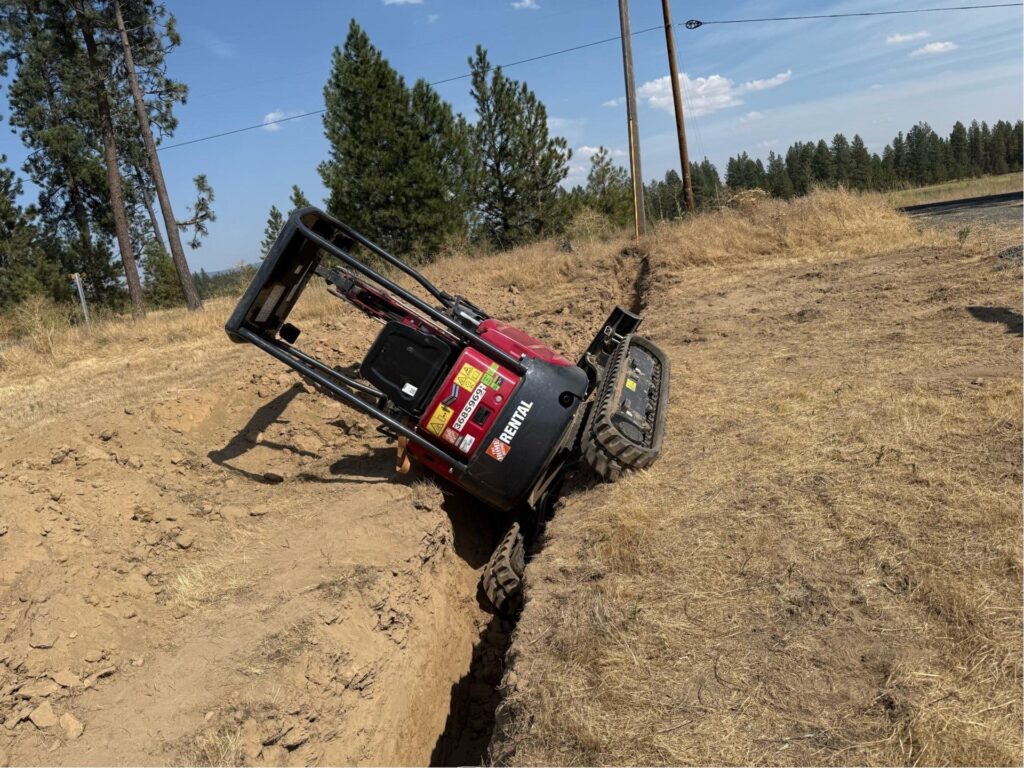
The first consideration in heavy equipment recovery is understanding how the machine is positioned and what is supporting its weight. Which way does it want to tip? What is the safest rigging and recovery technique? How can the recovery vehicle access the equipment safely?
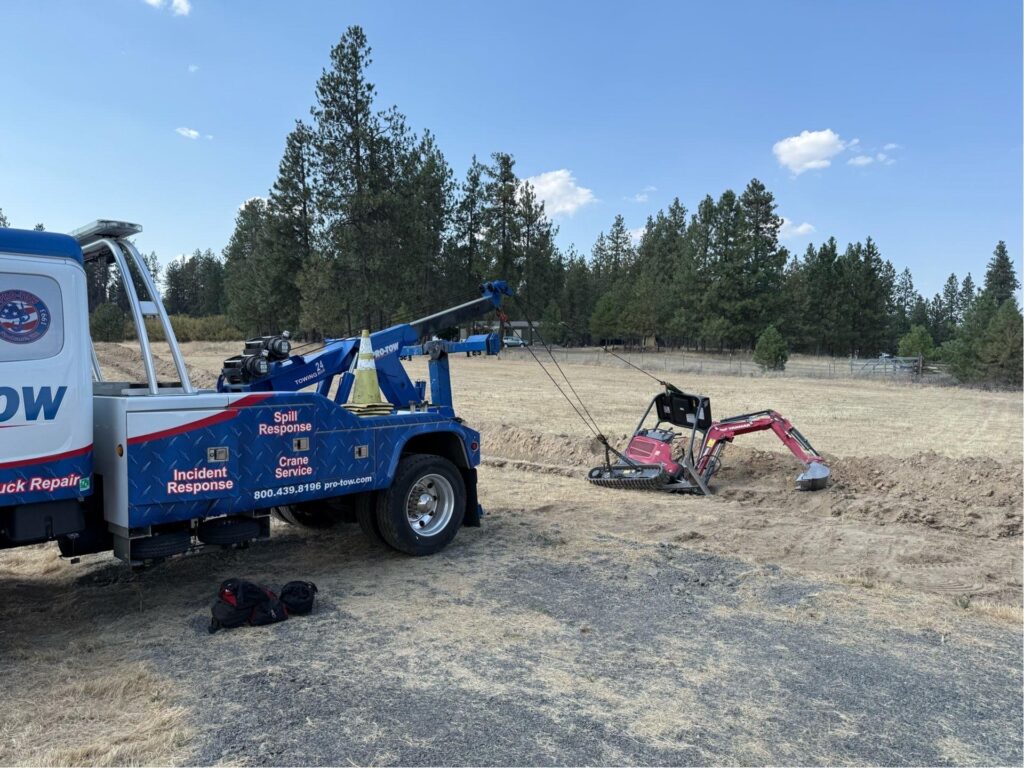
Thankfully, we could back our tow truck into the open field to hook up the excavator. We used a winch, rigged at the top of the cab and at the digger's track. We set at the right angle and with the perfect amount of force, to get the machine safely back on stable ground.
This job is pretty straightforward because the excavator was small. Still, proper rigging is an important part of heavy equipment recovery. The recovery point, direction of pull and available ground support all need to be considered before applying tension. A controlled pull can help reduce the risk of sudden movement, tipping and further damage to the equipment.
Leave Heavy Equipment Recovery to the Pros
It seemed like a simple job, but attempting this recovery without the right equipment could have caused some damage. Excavators, loaders, dozers and other heavy machinery can weigh several tons, and their weight can shift significantly when they are on unstable ground. Applying force from the wrong direction or attaching recovery equipment to the wrong point can damage the machine or cause it to move unexpectedly.
We were able to use a winch in this incident, but sometimes we have to pull out the big guns. We've been at recoveries where several crane-style wreckers were needed to pull extremely heavy equipment out of the mud. We've also recovered construction equipment that have gone off their transport trailers in road accidents. Sometimes, customers need a disabled excavator moved from A to B, and we use our crane to get it onto a flatbed trailer for transport.
The excavator in this incident was pretty small, but it was still more than a pickup truck with a winch could safely handle. And, it was a rental. If the customer had attempted a DIY recovery, they would've wrecked their vehicle and the rental.
When heavy construction equipment is stuck, overturned or in an unstable position, don't improvise with chains, trucks or equipment that isn't designed for the job. Call FleetEasy, and we’ll get you sorted out. The right recovery equipment and experience can make a significant difference in getting the machine safely back on solid ground.