
Written by the FleetEasy Team
One-Call Fleet Recovery in Washington State
Snow, ice and compacted slush are the ingredients for harsh and slippery driving conditions. On a mountain pass, these conditions are especially unforgiving, even for well-maintained trucks and experienced drivers.
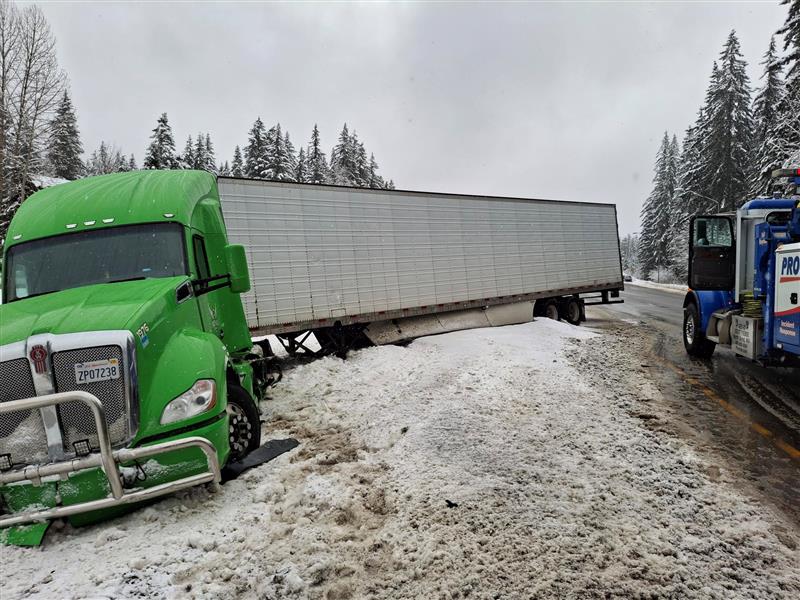
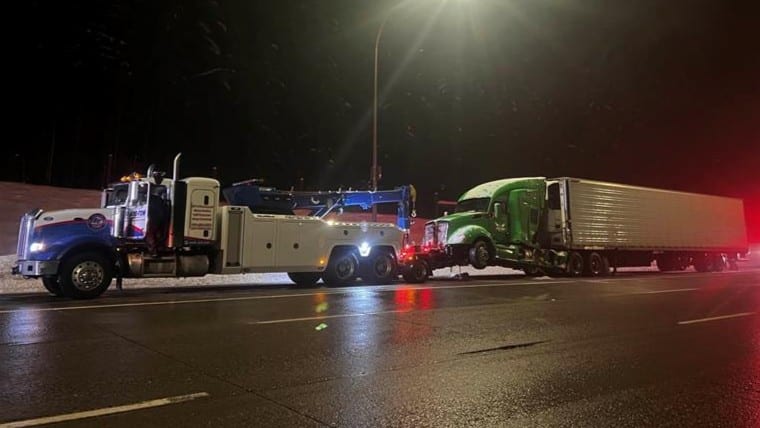
A Kenworth T680 hauling a box trailer went off the I-90 near exit 62 that leads to the Stampede Pass. The impact and angle of the trailer caused the tractor to bend into the diesel fuel tank, smashing it open. FleetEasy managed a collaborative response to this semi-truck recovery, and it went into the night.
Semi-Truck Recovery on Stampede Pass
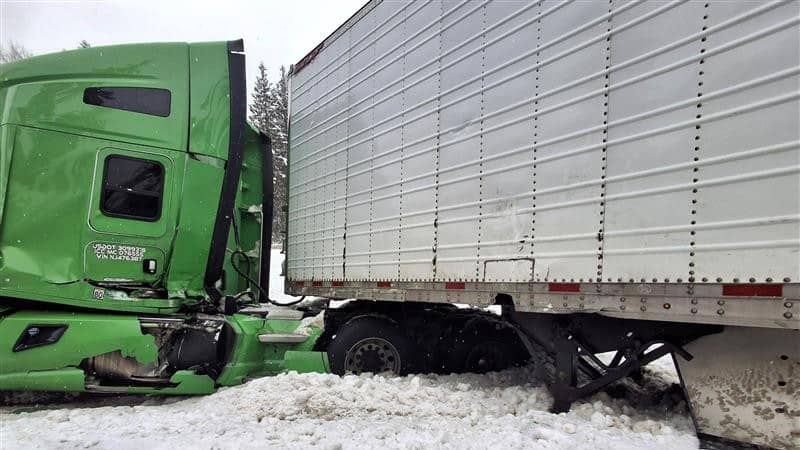
When our Pro-Tow by FleetEasy division arrived on the scene, we found the semi-truck and trailer wedged in deep snow along the side of I-90. The tractor was facing west, but covering the eastbound lanes. Our operator assessed the damage and could see that the fuel tank had been completely ripped open. We informed dispatch that spill recovery was required, so they could send up Pro-Enviro and our spill response team.

Once we emptied what was left in the fuel tank and contained the spill, we got to work rigging the tractor and trailer. First, we had to straighten the trailer so we could detach it from the tractor. We carefully did that, lifting it from the rear and moving it into place.
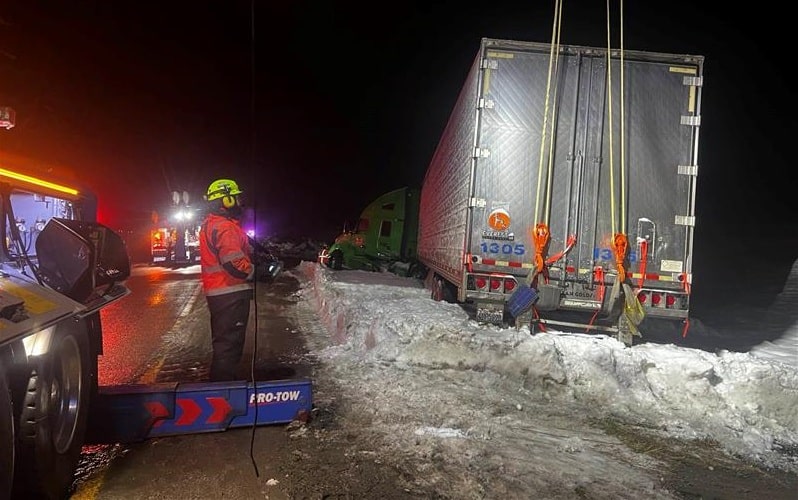
Once the trailer was detached, we winched out the damaged tractor, using a rope to tie its pieces together and reduce the risk of debris loss in the deep snow. With both out of the ditch, they were reattached. That way, Pro-Tow could safely tow both the truck and trailer together.
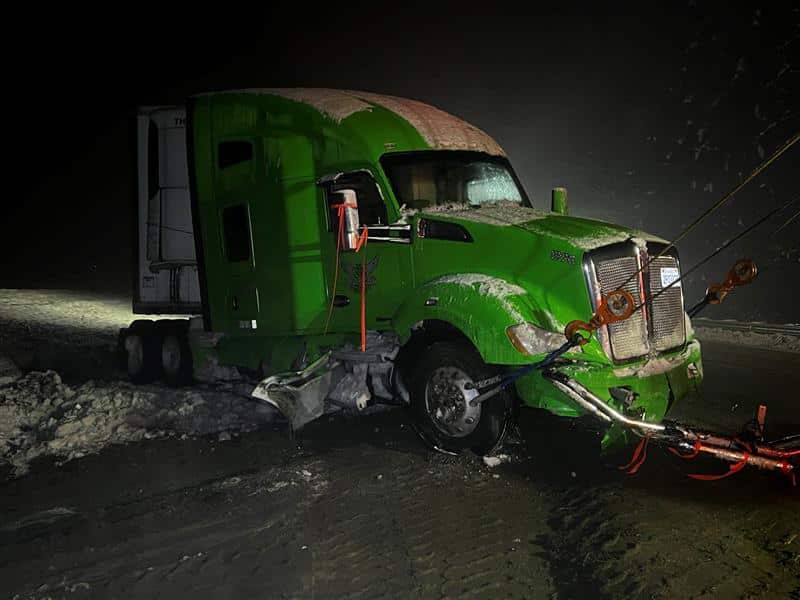
We brought it to a secure storage yard, giving the customer time to determine their next steps. Meanwhile, Pro-Enviro by FleetEasy got to work on the diesel fuel spill recovery and waste disposal.
What Causes Semi-Trucks to Slide in Winter Conditions?
A semi-truck and trailer sliding off the highway and into the ditch, as happened during this semi-truck recovery on Stampede Pass, occurs when several risk factors stack up at once. Drivers can be experienced and well-trained, but sometimes they are still no match for Mother Nature and the laws of physics.
Loss of Traction
One of the biggest causes is loss of traction. Snow, ice, freezing rain, or compacted slush can drastically reduce tire grip, particularly on downhill grades or curves. If a driver brakes too hard, accelerates at the wrong moment, or encounters black ice, the tractor or trailer can begin to slide. Once the trailer starts to swing, it can quickly push the tractor sideways and make it almost impossible for the driver to recover. The result of this trailer swing can sometimes be a tight jackknife or a bend, like what happened on the I-90 incident.
Speed and Weight Distribution
These factors also play a major role in navigating winter conditions. Even when driving below the posted limit, speed can still be too fast for winter conditions. Heavy or unevenly loaded trailers increase momentum, which means more force pushing the truck forward when traction is lost. On mountain passes like on the I-90, long descents combined with curves amplify this risk, especially if chains aren’t installed when conditions require them.
Road Design and Environmental Factors
Narrow lanes, steep drop-offs, shaded areas where ice lingers longer, sudden weather changes, and wind gusts can all contribute to a slide. In many cases, these incidents aren’t caused by reckless driving, but by how quickly conditions can change and how little margin for error exists.
Preventing the Need for Semi-Truck Recovery
Checking the weather and ensuring you have a detailed route plan can help you avoid accidents like these. In addition, extensive driver training that includes winter weather driving techniques, awareness of warning signs, and other safety measures can equip drivers to face these conditions. In the mountains, conditions can change from a sunny day to a slippery nightmare fast, so knowing what to do is key.
In addition, proactive and preventative maintenance will ensure your fleet trucks are prepared to meet Mother Nature at her worst. Investing in ongoing maintenance reduces unexpected breakdowns and ensures the truck is inspected and equipped to handle changing weather and road conditions.
During the winter, you should always carry chains and install them on mountain passes and high roads, even if it’s not required by the Department of Transportation. It’s better to take the time and be safe than sorry.
View which roadways require chains in the winter.
Read more about chains and winter driving in Washington.