

Written by the FleetEasy Team
Serving Auburn, Maple Valley, Spokane, and the Pacific Northwest
Is this old fleet truck worth fixing? It’s a valid question, and a comprehensive fleet inspection can help you find the answer.
A fleet vehicle has been sitting in the yard for years. Maybe it was parked during a budget freeze, sidelined due to staffing changes, or replaced by newer equipment. Now, circumstances have changed, and the question comes up: Is this truck still worth fixing, or is it time to walk away?
Recently, a customer contacted Motorplex by FleetEasy in Auburn about a 2000 GMC C8500 that had been parked and untouched for five years. The truck hadn’t been driven, maintained, or even started regularly during that time. The customer wanted us to give it a bumper-to-bumper fleet inspection to determine driveability and if it was worth recommissioning into the fleet.
What Happens When a Truck Sits for Years
A parked truck isn’t getting used, so its mileage remains lower and it avoids a bit of wear and tear. Right? Well, not really.
When a truck sits for years, things start to degrade. Fluids break down, seals dry out, rubber components crack, moisture seeps into systems, and fuel degrades. Electrical connections can corrode. Air systems develop leaks. Suspension components stiffen or fail. None of these issues will show up on an odometer, but we’ll find them with a complete fleet inspection.
Bumper-to-Bumper Fleet Inspection Tells All
Rather than starting with a list of repairs, the Motorplex by FleetEasy team began with a comprehensive inspection. We wanted to be thorough, so we could provide a detailed estimate and give the customer a crystal-clear picture of what the truck needed to be up to snuff.
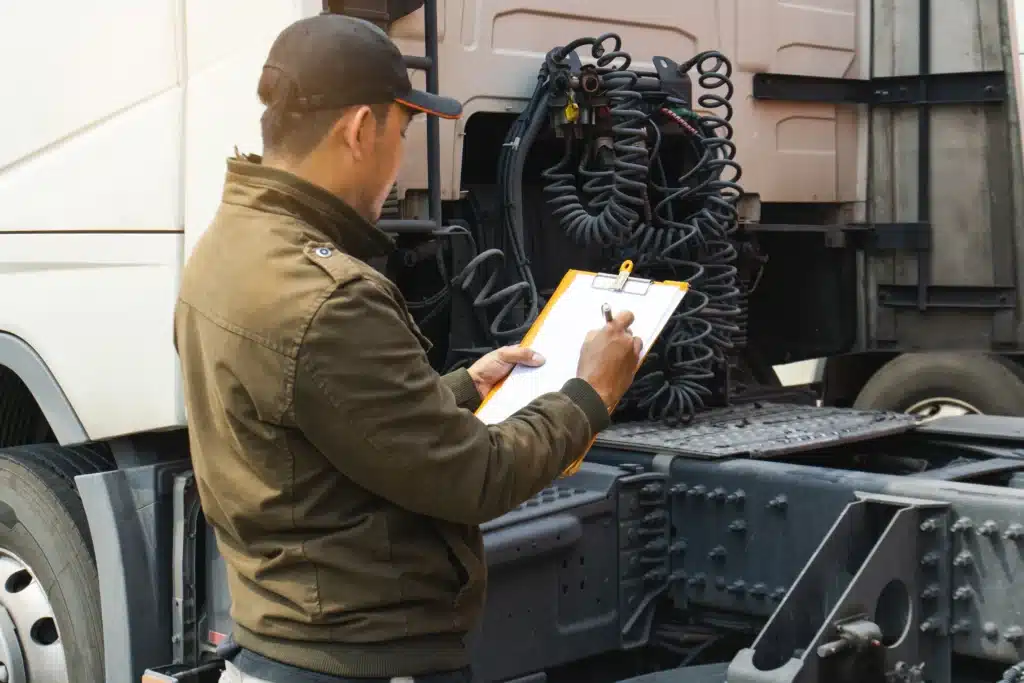
We started with enhanced drivability and engine performance diagnostics using advanced diagnostic software. This allowed us to evaluate how the engine, sensors, and control systems were responding after years of inactivity. We also performed a complete DOT inspection to assess safety, compliance, and roadworthiness. This is critical for any fleet vehicle returning to service.
There were no catastrophic failures. No single repair immediately disqualified the truck. Instead, the inspection revealed a long list of smaller issues. Worn bushings, aging shocks, minor air leaks, degraded fluids, contaminated fuel, and overdue filter changes. Individually, none of these issues was alarming. Together, they added up to a significant investment.
Transparent Estimate Helps With Decision Making
At FleetEasy, our role isn’t to push repairs after a fleet inspection. Our job is to let fleet owners make informed decisions.
For this GMC C8500, we provided a detailed estimate that itemized all the work required. It’s essential to provide a comprehensive estimate that reflects the true scope of work. We wanted to get the truck running smoothly and efficiently, and ensure that after the repairs were done, it was a dependable work truck again.
That transparency allowed the customer to decide to move forward with the repairs.
To Fix or Replace: That is the Question
To know whether to fix an older fleet vehicle or replace it is a common question for fleet owners. The decision shouldn’t be based on just the age of the vehicle. You have to consider the reliability, safety and total cost of ownership.
A well-built truck with a solid frame, healthy engine, and available parts can often justify restoration, even after years of sitting. On the other hand, vehicles with structural corrosion, recurring failures, or emissions systems that can’t be brought into compliance may cost more in downtime and risk than they’re worth.
To answer that question for yourself, you need to have all the information. A comprehensive fleet inspection establishes a true baseline, showing what needs attention today and what the vehicle will need in the near future. When repair costs are predictable and align with how the vehicle will actually be used, fixing the truck can be a smart business decision. When unknowns outweigh value, or don’t make sense financially or operationally, replacement is often the best long-term choice.
A bumper-to-bumper inspection provides clarity. It answers the real question fleet owners are asking: Is this truck still good? If so, at what cost?
Contact us for in-shop fleet repairs.
Book a bumper-to-bumper fleet inspection.